El Yunque: Reservations, Trails and Waterfalls
In this guide
Most of what is written about El Yunque is out of date on the single question people search first. As of October 2026 you do not need a reservation, and you do not pay to enter the forest. The US Forest Service states it directly: entrance to the El Yunque recreational corridor on PR-191 North in Río Grande is free and no reservations are required, open 8:00 a.m. to 5:00 p.m.
The constraint is not a ticket. It is parking. The Forest Service manages visitor numbers through designated parking areas, and the lots at the best stops fill by mid-morning. Get there early and El Yunque is one of the easiest great half-days in the Caribbean. Get there at eleven and you will circle.
Everything below is checked against US Forest Service and recreation.gov pages read in October 2026. Trail closures in particular have changed repeatedly since the 2017 hurricanes, so re-check the alerts page before you drive out.
What you actually pay
| Item | Cost (as of October 2026) |
|---|---|
| Driving and parking in the PR-191 corridor | Free |
| Walking the open trails and roadside stops | Free |
| El Portal de El Yunque Rainforest Center | $8.00 per person |
| El Portal with an Interagency / Senior / Access / Military / Every Kid Outdoors / Volunteer pass | $4.00 |
| Camping | Not currently available |
El Portal is classed as an Expanded Amenity Site, which is why a federal pass discounts rather than waives the fee. Its hours are 8:00 a.m. to 4:00 p.m., and the Forest Service says no reservation is required to visit it. You may still see advance tickets for El Portal on recreation.gov: those are optional, released 30 days ahead at 9:00 a.m., and required for everyone aged 16 and over who books that way. They do not get you into the forest, which needs no ticket at all.
One more free option: the Forest Service waives day-use recreation fees on six fee-free days a year — Martin Luther King Jr. Day, Presidents Day, International Day of Forests in March, National Get Outdoors Day in June, National Public Lands Day in September and Veterans Day.
Which trails are open
This is where guidebooks and tour listings go wrong most often, because the two most famous trails are shut.
| Trail or site | Status (US Forest Service, October 2026) |
|---|---|
| La Mina Trail and La Mina Falls | Closed |
| Big Tree Trail | Closed |
| El Yunque Peak Trail | Open as far as the Los Picachos spur; closed from there to the peak |
| Angelito Trail | Listed, no closure stated — short descent to the Río Mameyes |
| Baño de Oro Trail | Listed, no closure stated — short riverside walk past 1930s fish-hatchery tanks |
| Bisley Trail | Listed — connects Road 988 to La Coca Trail, with two river crossings |
| Caimitillo Trail | Listed — starts near Sierra Palm on PR-191 at km 12.0 |
| El Portal interpretive loop | Open — gravel loop below the visitor-centre walkway |
| Caimitillo Recreation Area | Temporarily closed |
| Baño Grande and Baño de Oro pools | Listed as open — 1930s Civilian Conservation Corps structures, now photo stops rather than swimming holes |
The La Mina and Big Tree closure has been running under the same alert since 2023, last refreshed in April 2026. One secondary source reports the Forest Service expects the work finished by summer 2027; we found no official page stating a date, so treat any reopening claim with suspicion until the alert itself changes.
The practical consequence: do not build your day around La Mina Falls. Several tour operators still advertise it.
A realistic half-day plan
The corridor is a single road climbing into the mountains, with the sights strung along it in order. Work uphill, then come back down.
- Arrive at the gate by 8:00–8:30 a.m. This is the whole trick. Early light, cooler air, empty lots, and the best chance of a clear view before cloud builds.
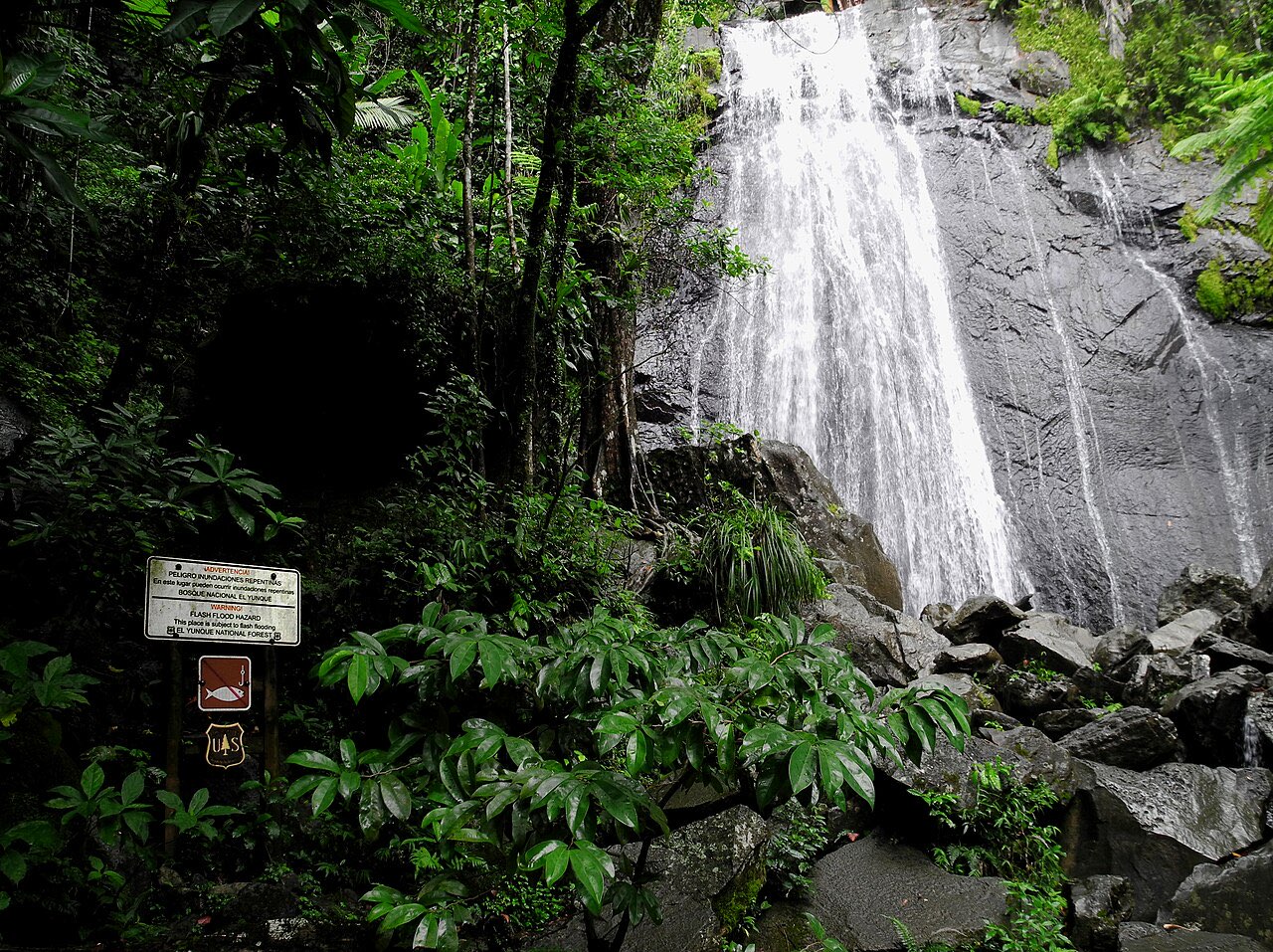
- La Coca Falls — an 85-foot curtain of water right beside the road, a few minutes above the gate. No hiking required; the roadside pull-off is small and fills fast.
- Yokahú Observation Tower — the stone tower a little further up, with steps to a platform looking north over the forest to the coast. Check its current status on the alerts page; towers have opened and closed repeatedly for repairs.
- A short trail from the open list above — Angelito or Baño de Oro, both brief and forgiving.
- El Portal Rainforest Center on the way out, if you want the exhibits and the canopy walkway, and $8 a head is worth it to you.
That is a comfortable morning. Adding El Yunque Peak as far as Los Picachos turns it into a full day with a real climb — steep, humid and exposed in places, and you cannot reach the summit itself.
Getting there — and the rideshare trap
El Yunque sits in the north-east of the island, roughly 45 minutes to an hour east of San Juan by car in light traffic, and much closer to Río Grande, Luquillo and Fajardo. The entrance that matters is PR-191 North from Río Grande.
The Forest Service is unusually blunt about transport. It says La Coca gate and El Portal are not authorised rideshare drop-off or pick-up points, and that visitors are “often forced to walk hours when leaving the forest because these apps do not mark a valid pick-up point.” Its recommended options are a private or rental car, a taxi, or a tour or transport operator with a permit to work in the forest.
In practice that means: drive yourself, or book a tour that includes transport both ways. A one-way rideshare into a mountain forest with no phone signal and a 5 p.m. gate closing is a genuinely bad plan. Our Puerto Rico driving guide covers rental logistics on the island.
Note too that PR-191 does not cross the forest. The road is severed in the middle, and the southern section is a separate, much quieter approach from Naguabo — not a shortcut, and not where the famous stops are.
What the forest is actually like
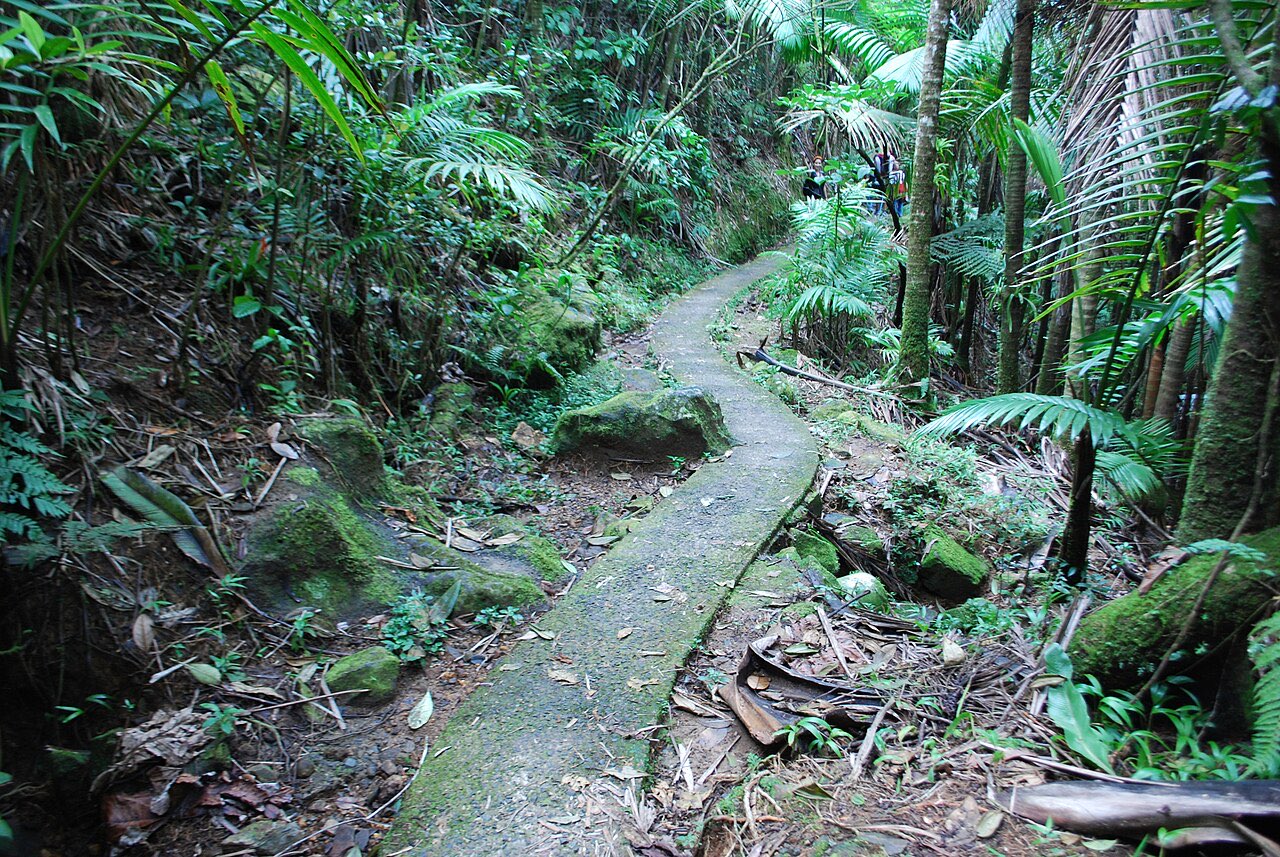
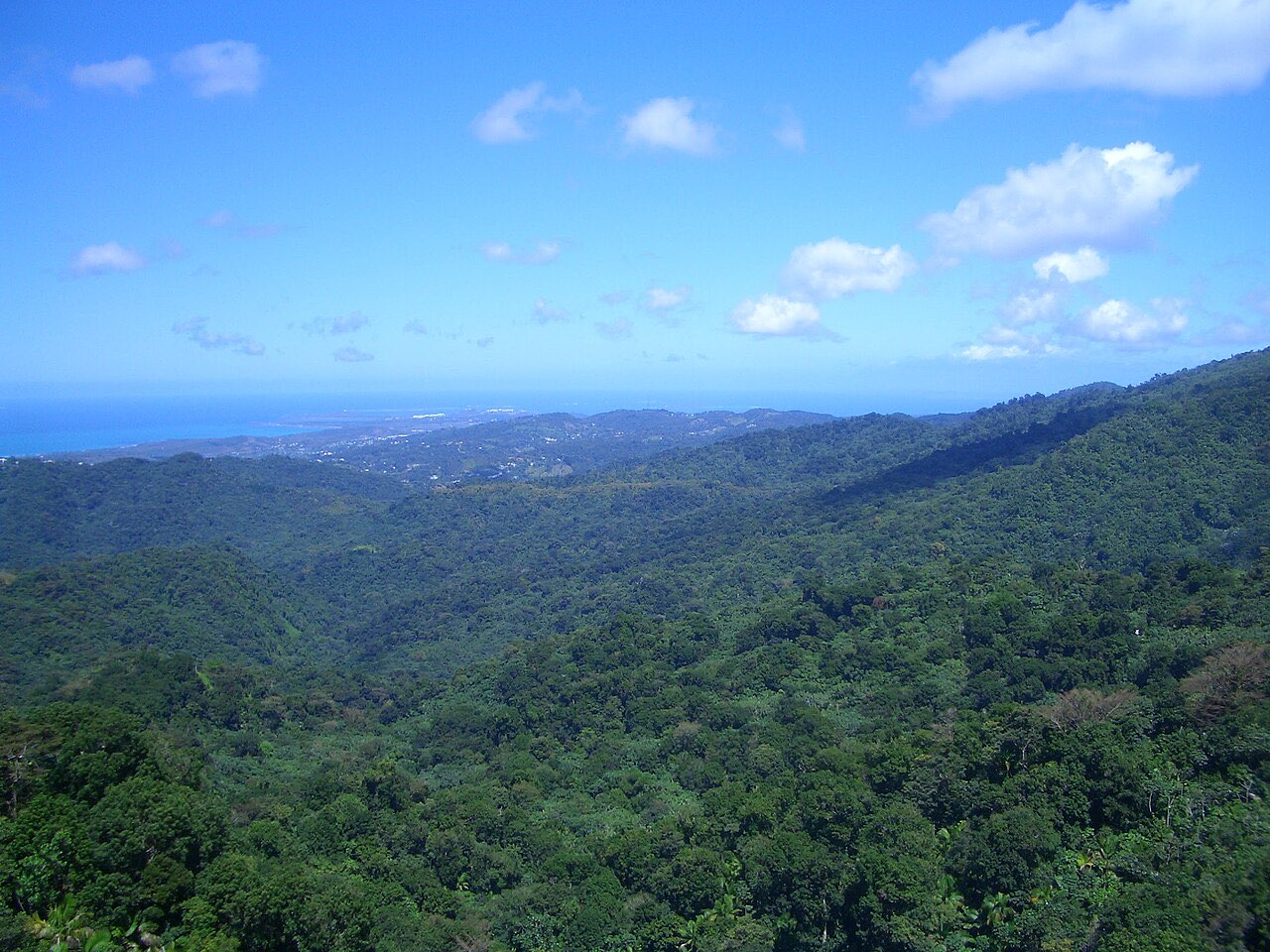
El Yunque is the only tropical rainforest in the US National Forest System, and the thing that surprises first-timers is how vertical and wet it is. Rain is not a season here; it is a daily event at altitude, which is exactly why the ferns are the size of trees and the moss grows on the moss. Afternoon cloud frequently erases the coastal view entirely, which is the other argument for an early start.
The soundtrack is the coquí — the small tree frog whose two-note call is Puerto Rico’s unofficial national sound, and which gets dramatically louder towards dusk. Birders come for the endangered Puerto Rican parrot, though seeing one is a matter of luck rather than planning.
Hurricanes Irma and María in 2017 damaged El Portal structurally and started the long cycle of trail closures and rebuilding that is still running. What you see today is a forest recovering in public, with construction fencing in places and a trail network smaller than the map suggests.
What to bring
- Shoes with grip. The paved trails are permanently slick with wet moss, and this is where people get hurt.
- A rain layer, not an umbrella. It will rain, and it will stop.
- Cash or card for El Portal, and your federal pass if you have one.
- Water and a snack. Food options inside the corridor are minimal.
- Insect repellent and swimwear under your clothes if you plan on any river stop.
- Downloaded maps. Signal is patchy to non-existent on the upper road.
Leave the drone at home — national forests restrict their use — and treat the river rocks with respect; flash flooding after mountain rain is the most under-appreciated hazard in the forest.
When to go
El Yunque works year round, with no real off-season for the forest itself. Mornings are reliably better than afternoons in every month. The one planning input that matters is the Atlantic hurricane season, June through November, which shapes storm risk and the odds of fresh closures; our Puerto Rico hurricane season guide covers how to think about that, and the best time to visit Puerto Rico sets it against the island’s crowds and prices.
If El Yunque is your only nature day, pair it with Luquillo beach or the kiosks on the way back. If you have a second, the bioluminescent bays are the island’s other genuinely unusual natural attraction, and a good night-time counterpart to a rainforest morning.
Before you drive out, open the Forest Service’s own pages: current conditions for the corridor’s status and hours, and the alerts page for the live trail list. They are short, they are authoritative, and they change more often than anything written about them.
Frequently asked questions
Do I need a reservation for El Yunque?
No. The US Forest Service states plainly that entrance to the El Yunque recreational corridor on PR-191 North in Río Grande is free and no reservations are required, with operating hours of 8:00 a.m. to 5:00 p.m. The recreation.gov reservation system that ran from 2020 is suspended. A stale listing still appears on recreation.gov, which is why so many guides and tour sellers still say otherwise.
Is there an entrance fee for El Yunque?
Not for the forest itself. Driving the PR-191 corridor, parking in the designated lots and walking the open trails is free. The one fee is El Portal de El Yunque Rainforest Center, the main visitor centre, at $8.00 per person — $4.00 for holders of an Interagency Annual, Senior, Access, Military, Every Kid Outdoors or Volunteer pass.
Can I hike to La Mina Falls?
No. La Mina Trail and Big Tree Trail remain closed under a long-running Forest Service alert, so the waterfall at the end of La Mina is not reachable. Secondary sources report a target of summer 2027 for the construction work, but no official page we read states a reopening date. La Coca Falls, visible from the road not far above the gate, is the waterfall most visitors actually see.
How early should I arrive at El Yunque?
Before 9 a.m. on any day you care about. The forest does not cap visitors with tickets; it caps them with parking. The Forest Service says visitor capacity is being managed because of parking limitations and ongoing construction, and parking is allowed only in designated areas. Lots at the popular stops fill first, and the gate closes at 5 p.m.
Can I take an Uber to El Yunque?
You can get there, but getting back is the problem. The Forest Service says the La Coca gate and El Portal are not authorised rideshare drop-off or pick-up points, and that visitors are often forced to walk for hours because the apps do not mark a valid pick-up. It recommends a private or rental car, a taxi, or a permitted tour operator instead.
Can you camp in El Yunque?
Not at the moment. Forest Service camping permits are listed as currently unavailable, with a limited number of campsites expected to reopen at a date still pending. Plan on a day trip from San Juan, Río Grande, Luquillo or Fajardo.
Keep planning
- Best Time to Visit the Dominican Republic: Season by Coast
Best time to visit the Dominican Republic month by month: hurricane season dates, Samana whale season, sargassum by coast, and why the north coast runs backwards.
Updated Oct 2026 - Costa Rica in 10 Days: Volcano, Cloud Forest and Coast
A realistic 10-day Costa Rica itinerary — La Fortuna, Monteverde and Manuel Antonio — with honest drive times, official park fees and the booking rules.
Updated Oct 2026 - Machu Picchu Tickets: Circuits, Timed Entry and How to Book
How Machu Picchu tickets work in 2026: the three circuits and ten routes, prices in soles, daily caps, timed entry and booking on the official portal.
Updated Oct 2026